
 Sucre / Bolivia
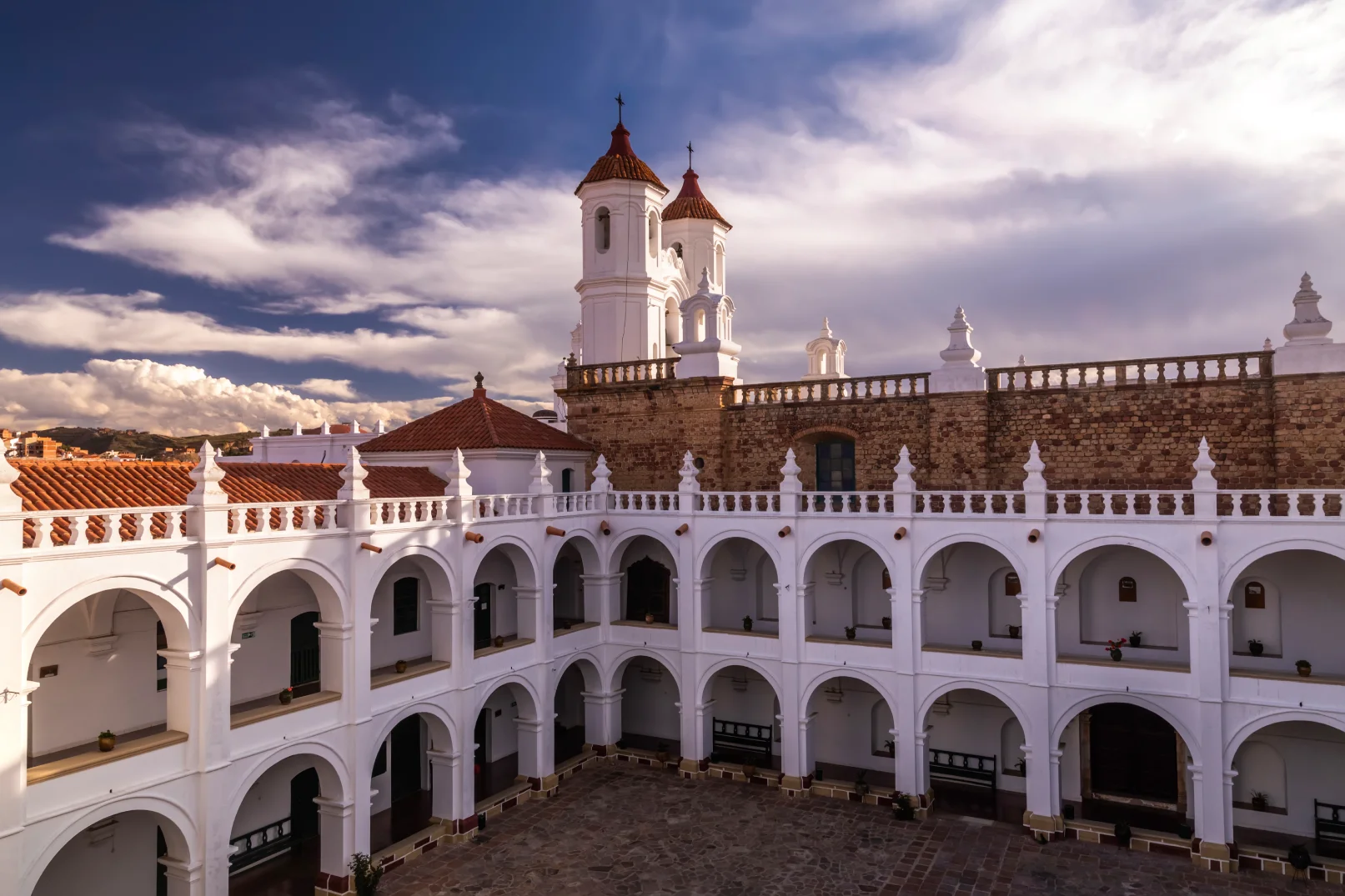
Sucre: Bolivia’s White City
Nestled in a valley with a mild and pleasant climate, at 2,810 meters above sea level, Sucre is one of South America’s most beautiful and emblematic cities. As Bolivia’s constitutional capital, it enchants visitors with its colonial elegance, tranquil atmosphere, and extraordinary historical and cultural heritage.
With a population of approximately 400,000 inhabitants in its metropolitan area, Sucre seamlessly combines the charm of a heritage city with a vibrant cultural and university life. Its cobblestone streets, immaculate white façades, and flower-filled squares have earned it the well-deserved title of the “White City.”
Declared a World Heritage Site by UNESCO, Sucre is home to one of the best-preserved colonial ensembles in Latin America. Every corner invites visitors to discover centuries of history, art, and tradition.
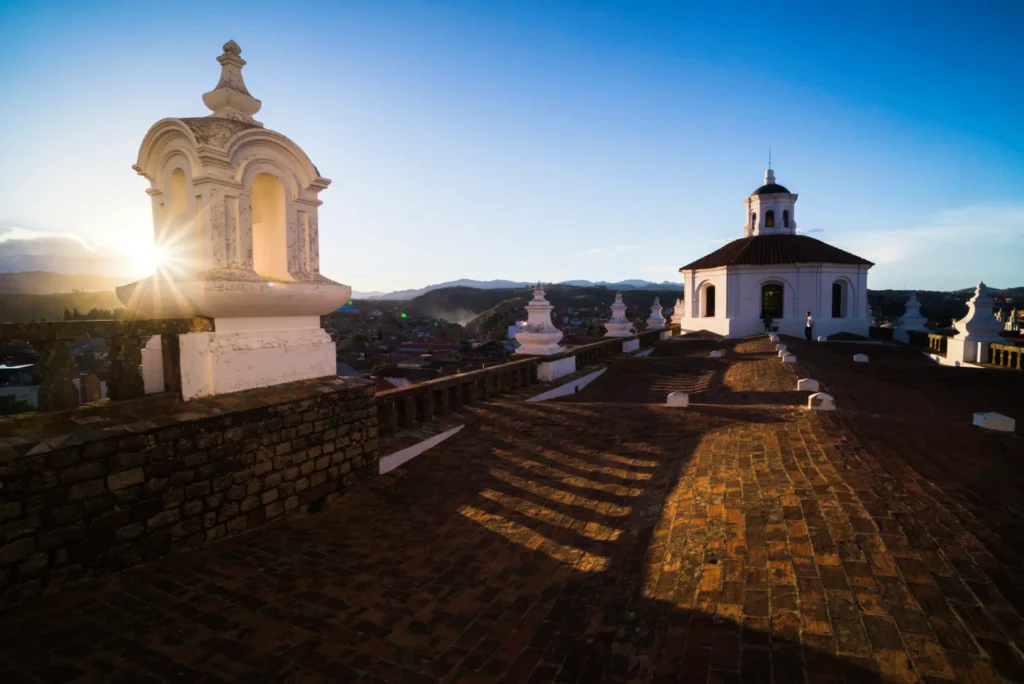
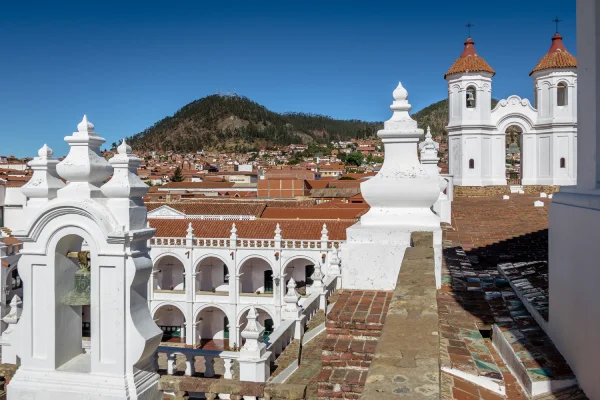
Among its must-see attractions are the historic Casa de la Libertad, birthplace of Bolivian independence; the magnificent Convento de San Felipe Neri, renowned for its terraces and panoramic views; and the fascinating Museo ASUR, where the rich textile heritage of the region’s indigenous cultures is beautifully preserved.
The city also invites visitors to stroll through the charming Parque Bolívar, admire the beauty of the Monasterio de La Recoleta, and explore the distinctive Mercado Central de Sucre, an ideal place to discover the flavors and colors of local cuisine.
For paleontology enthusiasts, a visit to the extraordinary Parque Cretácico is truly unforgettable, as it houses one of the world’s largest concentrations of dinosaur footprints.
Visiting Sucre is to immerse yourself in a city where history, culture, and beauty coexist in perfect harmony—a destination that captivates with its authenticity, refinement, and the warmth of its people.
Essential Experiences in Sucre
Discovering Sucre is to immerse yourself in a city where history, culture, and colonial elegance intertwine in perfect harmony. Every corner invites you to explore centuries of heritage, art, and tradition in one of South America’s most fascinating historic capitals.
Historic Center of Sucre
A walking tour through Sucre’s historic center reveals the extraordinary beauty of a city designated as a World Heritage Site by UNESCO. Its cobblestone streets, pristine white façades, and charming plazas reflect the splendor of its colonial past.
The journey begins at the iconic Plaza 25 de Mayo, the heart of the city and the focal point of its social and historical life. Here, you may also admire from the outside the majestic Palacio de Gobierno de Chuquisaca, now the seat of the regional government and formerly Bolivia’s presidential palace when Sucre served as the nation’s executive capital until the late nineteenth century.
From the plaza, the tour continues to the historic Casa de la Libertad, birthplace of Bolivian independence and one of the country’s most significant national monuments.
The experience then proceeds to the magnificent Catedral Metropolitan de Sucre, home to the extraordinary Chapel of the Virgin of Guadalupe, renowned for its invaluable artistic and devotional treasures. (Open for visits on Sunday mornings only.)
The itinerary also includes a visit to the fascinating Museo ASUR, which houses one of Bolivia’s most important collections of indigenous textile art—a living testament to the creativity and cultural richness of the region’s native peoples.
This experience is further enriched by a visit to the historic Monasterio de La Recoleta, one of the city’s most emblematic colonial landmarks. Here, you can explore its remarkable museum of religious art, admire the charming courtyards of its former convent, and enjoy one of the most spectacular panoramic viewpoints in Sucre, offering unforgettable vistas of the White City and its surroundings.
Afterward, enjoy a leisurely stroll through the elegant Parque Bolívar, one of the city’s most iconic and graceful public spaces.
Along the way, you will also admire from the outside two distinguished republican-era buildings: the historic Teatro Gran Mariscal and the imposing Tribunal Supremo de Justicia, both enduring symbols of Bolivia’s institutional and cultural legacy.
Visiting Sucre is to step into a city where every plaza, every church, and every façade tell a story of freedom, artistry, and refinement—a destination that captivates with its authenticity, beauty, and extraordinary cultural heritage.


 English
  Spanish
  French