
 Potosí / Bolivia
Uyuni Salt Flats: the destination that redefines vastness
Discover the breathtaking Uyuni Salt Flats, one of the most extraordinary natural wonders of Bolivia, located in the southwest of the country, in the Potosí region. At over 3,600 meters above sea level, this unique landscape invites you to experience something that goes beyond imagination.
Covering nearly 12,000 square kilometers, the Uyuni Salt Flats are the largest salt desert on the planet—an endless white ocean that impresses both by its scale and its purity. Its cold, dry, and windy climate enhances the feeling of being in a remote, untouched, and authentic territory.
Beneath its surface lies one of its greatest treasures: the largest lithium reserve in the world, a strategic resource that makes this place not only a natural spectacle, but also a site of global importance.
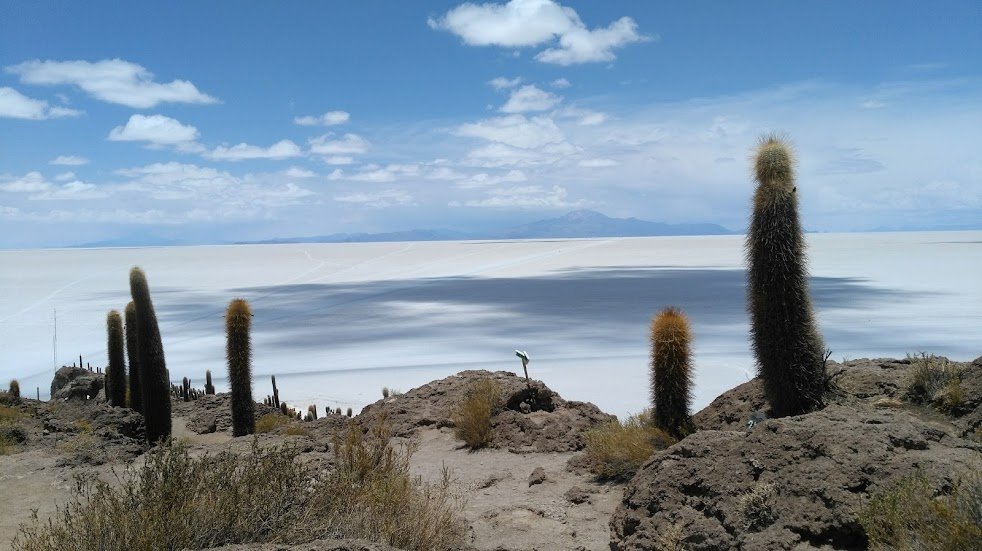
During the rainy season, the salt flats transform into the largest natural mirror on Earth, creating a magical visual effect where sky and land merge into a perfect reflection. In contrast, during the dry season, its salt crust—ranging from 1 to 10 meters thick—rests upon layers that reach depths of up to 120 meters, revealing the remarkable geological scale of this landscape.
Exploring the Uyuni Salt Flats is stepping into a surreal world: islands covered with giant cacti, endless horizons, and sunsets that seem frozen in time. Every moment here is designed to amaze, move, and remain in your memory forever.
In essence, the Uyuni Salt Flats are more than a destination—they are an experience that redefines the way we travel.
TRAIN CEMETERY: MEMORY AND MYSTERY IN THE ALTIPLANO
On the outskirts of the city of Uyuni, in the heart of Bolivia’s highlands, lies one of the country’s most unique and photogenic sites: the enigmatic Train Cemetery.
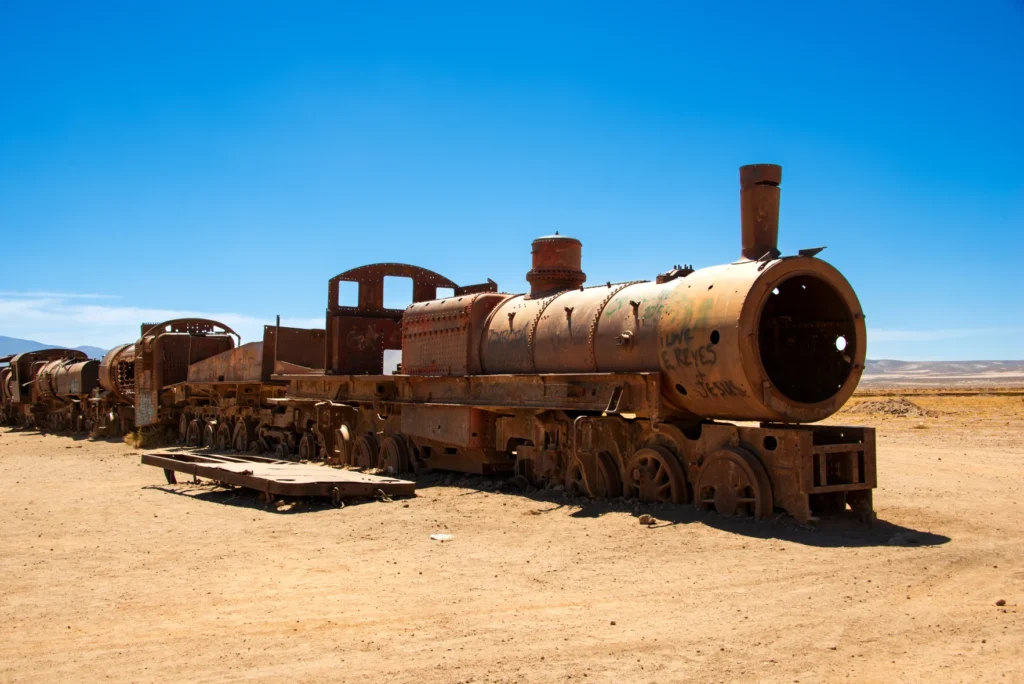
Rich in history and nostalgia, this place brings together old locomotives and railway cars dating back to the late 19th and early 20th centuries—remnants of a time when Uyuni was a key railway hub linked to the mining industry. Today, these iron structures, frozen in time, rest silently on the vast Andean plains.
Over the years, the harsh climate and constant winds have transformed these trains into true metal sculptures, creating a landscape where history, art, and decay merge into a singular atmosphere. Their rusted forms, set against an endless sky, evoke a sense of poetic abandonment that captivates travelers from around the world.
More than a historical site, the Train Cemetery is a place that invites you to imagine, explore, and capture unforgettable images in a setting suspended between past and present.
The Train Cemetery is a place where history rests… and time stands still.
LÍPEZ DESERT: THE WILD BEAUTY OF THE ALTIPLANO
Venture into the breathtaking Lipez Desert, one of the most remote and fascinating regions in southwestern Bolivia. Located in the Potosí department and at altitudes exceeding 4,000 meters above sea level, this vast territory unfolds like a landscape from another world, where nature reveals itself in its purest and most extreme form.
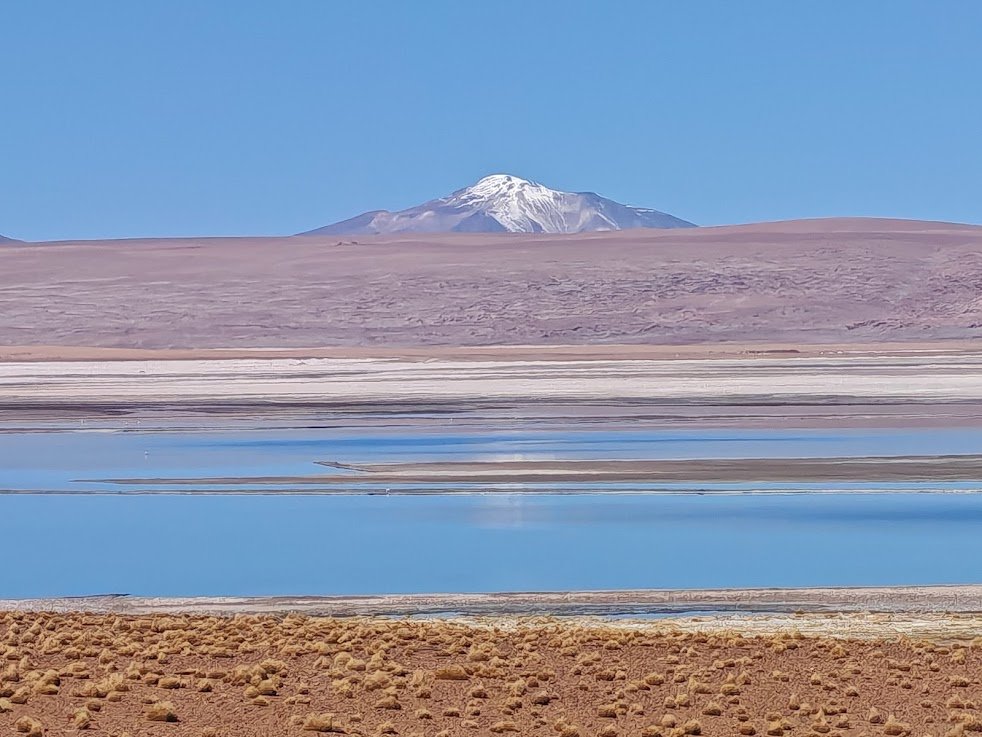
Characterized by a cold, dry, and windy climate, the desert offers scenery of striking intensity: endless plains, active and dormant volcanoes, rock formations sculpted by time, and vividly colored lagoons that contrast dramatically with the surrounding aridity.
Among its greatest treasures are natural gems such as Laguna Colorada, renowned for its deep red hues and the presence of Andean flamingos, and Laguna Verde, whose emerald waters shine at the foot of towering volcanoes. These ecosystems, set in extreme altitudes, host a unique biodiversity adapted to harsh conditions, making the desert an extraordinary natural sanctuary.
The Lipez Desert is part of the Eduardo Avaroa Andean Fauna National Reserve, a protected area spanning more than 700,000 hectares, home to iconic species such as flamingos, vicuñas, and Andean foxes.
Exploring this region is embarking on an authentic and deeply transformative journey: from geysers and hot springs to colored deserts and endless skies, each day reveals a new landscape—always more impressive than the last.
The Lipez Desert is a journey to the essential, where vastness, silence, and the raw power of nature create an unforgettable experience.
STONE TREE: THE DESERT’S NATURAL SCULPTURE
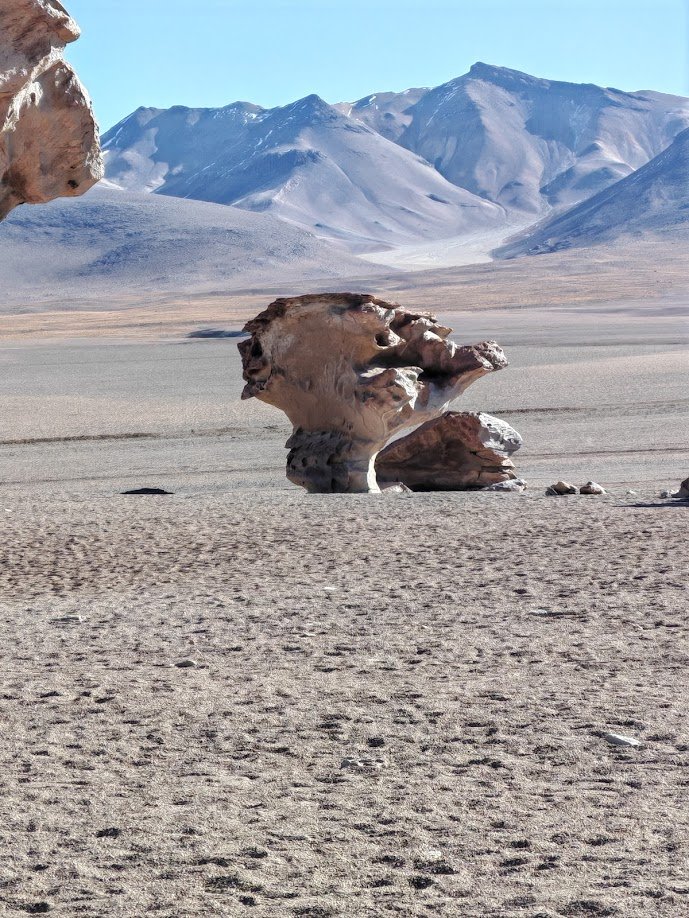
Amid the surreal landscapes of the Lipez Desert in southwestern Bolivia rises one of the most iconic and photographed formations of the Altiplano: the remarkable Stone Tree.
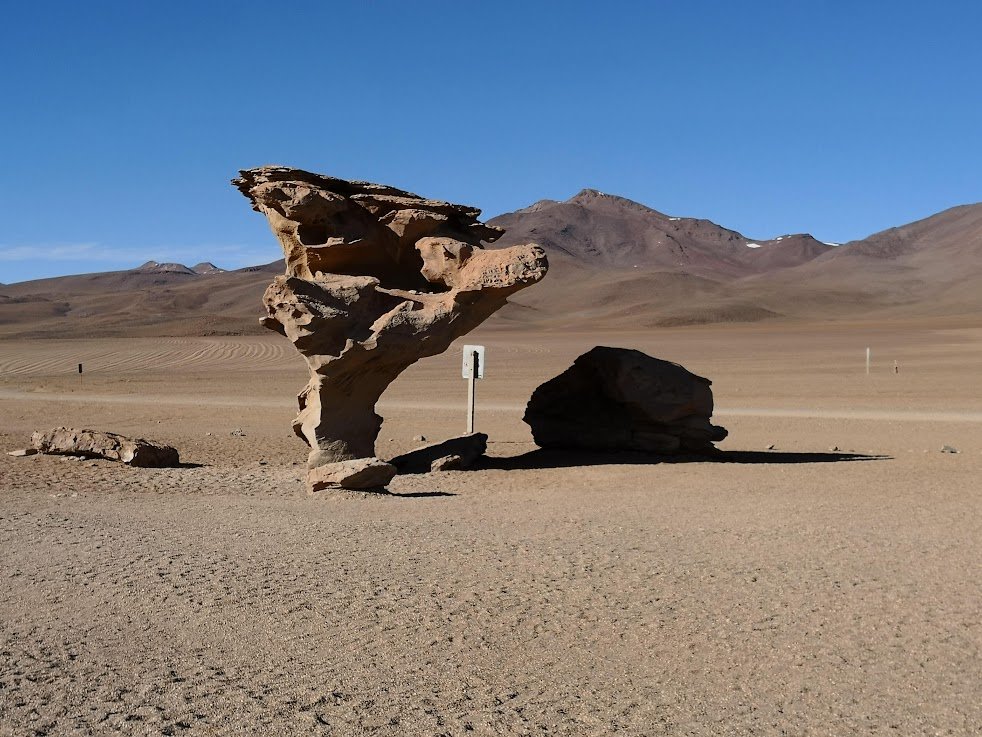
This striking natural sculpture, reaching approximately 7 meters in height, has been shaped over thousands of years by the relentless force of wind and erosion. Its form, resembling a solitary tree standing in the middle of the desert, makes it a powerful symbol of nature’s strength and the passage of time.
Located in an area of extreme climate—cold, dry, and windy—the Stone Tree is part of a landscape dominated by volcanic sands and vast plains, where every element appears carefully sculpted by natural forces. Its silhouette, set against the deep sky of the Altiplano, creates an almost unreal scene, as if from another planet.
This site invites not only contemplation but also creative photography, making it an essential stop on any journey through the region.
The Stone Tree is a masterpiece of nature, where wind and time have left their eternal mark.
LAGUNA COLORADA: THE RED SANCTUARY OF THE ANDES
In the heart of southern Bolivia’s Altiplano, within the Eduardo Avaroa Andean Fauna National Reserve, lies the majestic Laguna Colorada—one of the most striking and emblematic landscapes in the country’s southwest.
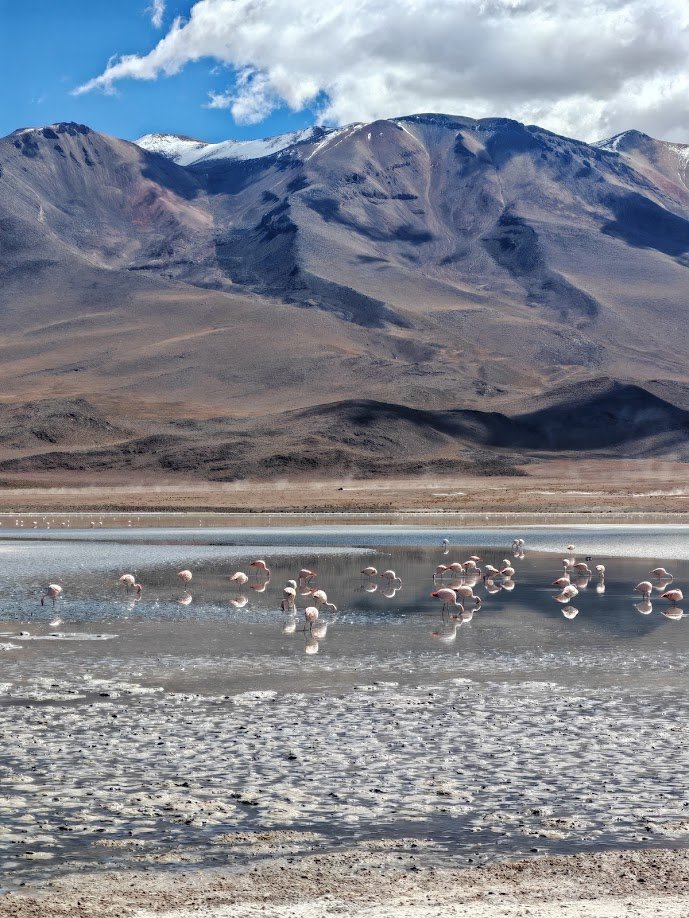
Considered the largest lagoon in the region, this remarkable body of water stands out not only for its scale, but for the visual spectacle it offers. Its intense red hues, created by algae and mineral sediments, form a unique contrast with the white borax deposits and the deep blue sky of the Altiplano.
Laguna Colorada is also a true sanctuary of life. It is home to the most important colony of Andean flamingos in the region, along with other flamingo species that find in this ecosystem the perfect place to feed and reproduce. Watching these elegant birds glide across the crimson waters is, without a doubt, one of the most unforgettable moments of any journey.
Located at over 4,200 meters above sea level, in an environment defined by a cold, dry, and windy climate, the lagoon offers an authentic experience where nature reveals itself in its purest and most powerful form.
In essence, Laguna Colorada is a unique setting where the force of nature, color, and life come together in perfect harmony.
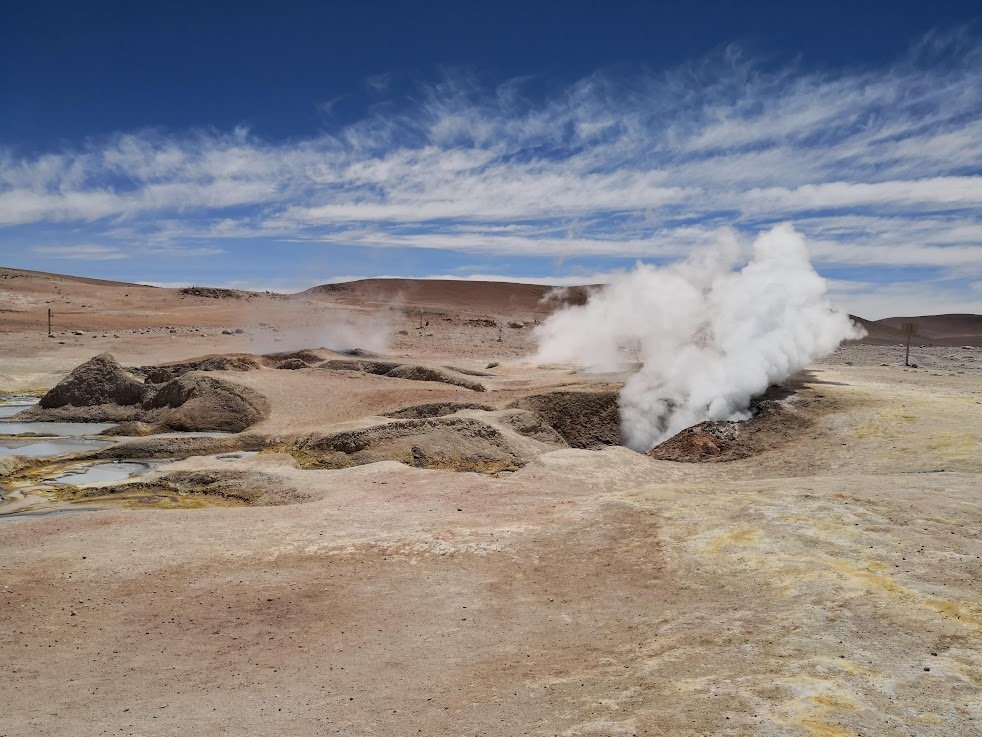
SOL DE MAÑANA GEYSERS: THE LIVING ENERGY OF THE EARTH
In the early hours of the day, as the Altiplano awakens under a cold, golden light, the geothermal field of Sol de Mañana reveals one of the most breathtaking spectacles in southwestern Bolivia.
Located at over 4,800 meters above sea level, these geysers form an active volcanic landscape where the Earth seems to breathe. Intense fumaroles, rising steam columns, bubbling mud pools, and smoking craters create a dynamic and almost surreal scene—especially at sunrise, when the temperature contrast intensifies the geothermal activity.
The terrain, of volcanic origin, is painted with mineral colors ranging from ochres and reds to deep grays, shaping an environment that evokes primordial landscapes. The air, filled with steam and energy, conveys the raw internal power of the planet in its purest form.
Visiting Sol de Mañana is a unique sensory experience: the sound of steam escaping, the heat rising from beneath the surface, and the vastness of the landscape come together to create an unforgettable moment in the heart of the Andes.
The Sol de Mañana Geysers offer a direct encounter with the untamed force of the Earth.
SALVADOR DALÍ DESERT: A LANDSCAPE WORTHY OF A SURREAL DREAM
In the remote expanses of southwestern Bolivia, within the breathtaking Lipez Desert, lies the fascinating Salvador Dalí Desert—a landscape that seems to have emerged straight from a work of art.
Named for its striking resemblance to the surreal worlds of painter Salvador Dalí, this desert is defined by rock formations scattered seemingly at random across a vast, arid plain. Each stone, shaped by time and erosion, appears deliberately placed, as if guided by an invisible artistic vision.
Surrounded by mountains and volcanoes, and set at high altitude in a cold, dry, and windy environment, the Salvador Dalí Desert offers a unique visual experience were reality blends seamlessly with imagination. The absence of vegetation and the vastness of the terrain enhance the feeling of being in an unreal, almost dreamlike setting.
This is a place that invites you to pause, reflect, and let your mind wander—an essential stop for those seeking to discover the most artistic and surprising side of the Andean Altiplano.
Discover the Salvador Dalí Desert. A place where nature becomes art… and the landscape a masterpiece.
LAGUNA VERDE: THE EMERALD ENIGMA OF THE ALTIPLANO
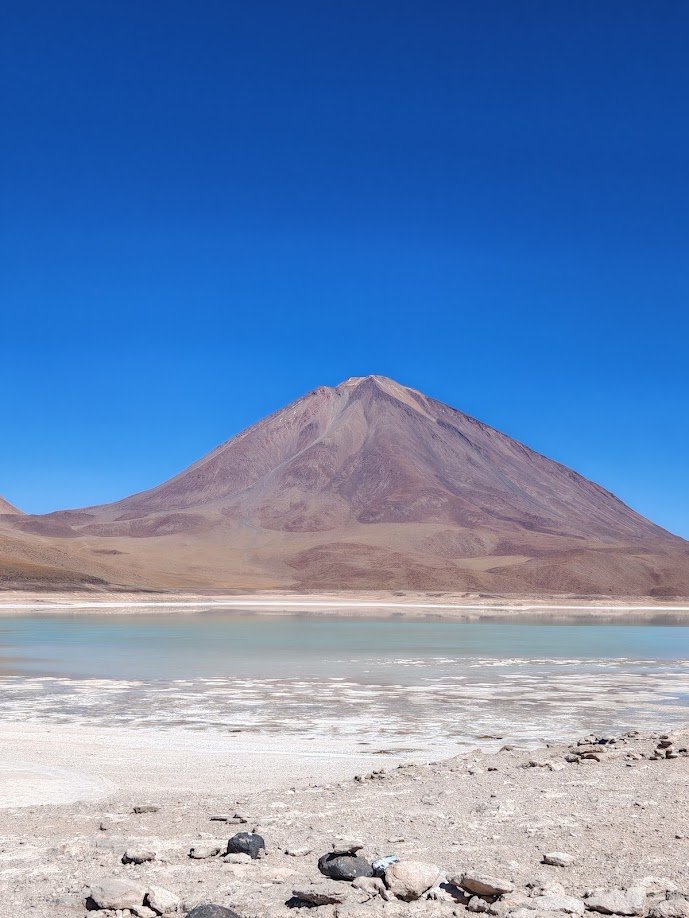
In the far southwest of Bolivia, where the landscape becomes more remote and captivating, the stunning Laguna Verde emerges—a natural jewel suspended between earth and sky.
Its intense green hues, shifting with the light and wind, create a mesmerizing visual spectacle, framed by one of the most dramatic settings of the Andean Altiplano. From its shores rises the majestic Licancabur Volcano, accompanied by an entire volcanic chain that shapes a breathtaking and powerful horizon.
This extreme environment impresses not only for its beauty, but also for its unique conditions: its waters contain no microbial life, reinforcing its pure, mineral, almost otherworldly character. It is a place where nature reveals itself in its most essential form—untouched, silent, and boundless.
Located in one of the most remote regions of the continent, Laguna Verde offers an experience of absolute contemplation, where silence, vastness, and volcanic power create a deeply moving atmosphere.
Laguna Verde: a unique place where nature reveals its most enigmatic and spectacular side.


 English
  Spanish
  French