
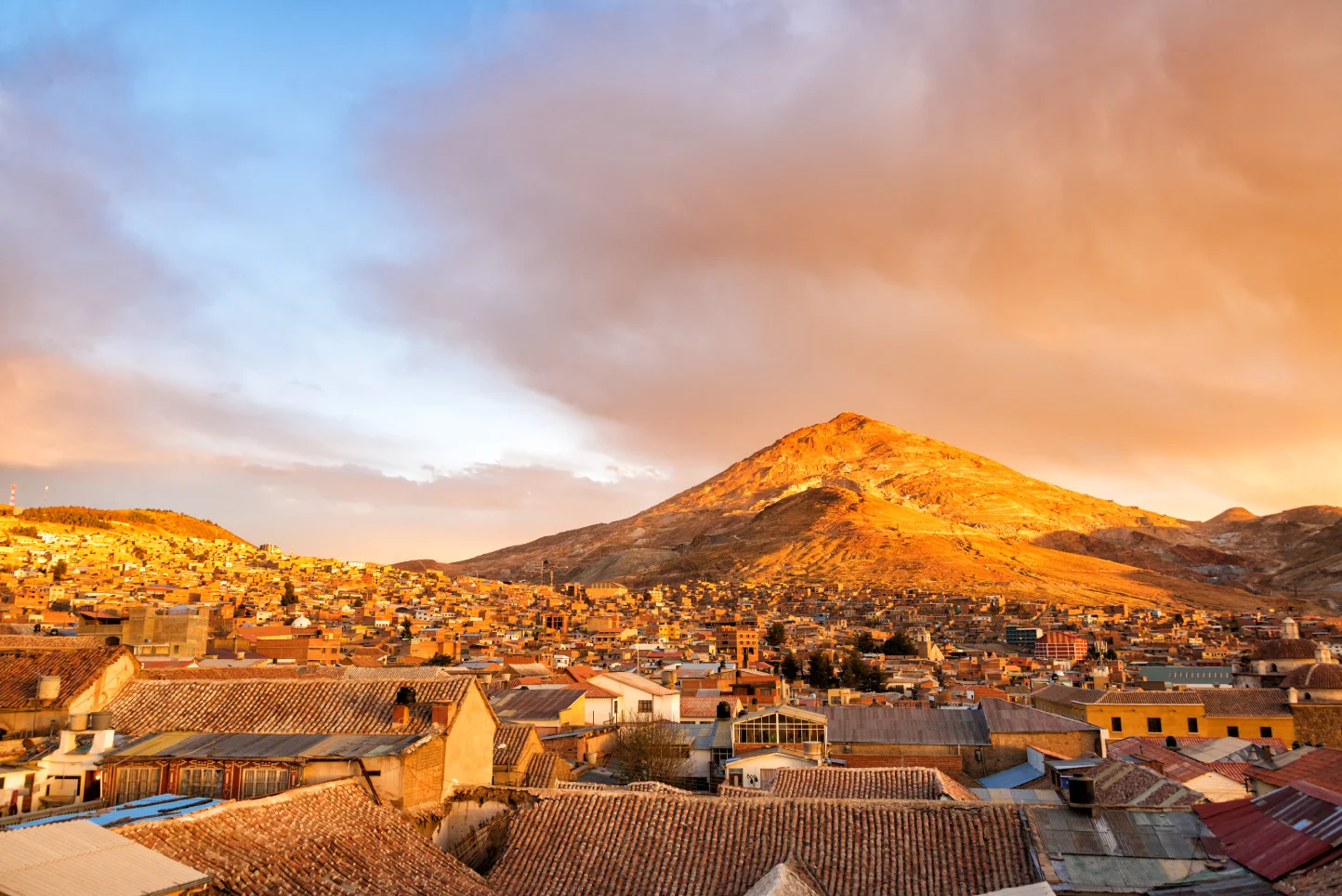
 Potosí / Bolivia
Potosí: Where History Touches the Sky
In the heart of the Bolivian Altiplano, at an altitude of 4,090 meters above sea level, lies Potosí, a city that seems suspended between earth and sky. Home to approximately 240,000 inhabitants, this Andean jewel captivates with its extraordinary historical richness, architectural legacy, and the profound intensity of its soul.
Designated a UNESCO World Heritage Site, Potosí preserves one of the most remarkable colonial ensembles in the Americas. Its cobblestone streets, plazas, and churches safeguard some of the finest examples of Mestizo Baroque, a unique artistic style that beautifully blends European tradition with Andean creativity and sensibility.
Among its architectural treasures are the elegant façade of the Teatro Modesto Omiste, the imposing tower of the former Church of the Society of Jesus, and above all, the extraordinary portal of the Church of San Lorenzo de Carangas, widely regarded as one of the most refined masterpieces of Mestizo Baroque on the continent.
The Potosí experience is further enriched by a visit to the iconic Casa Nacional de Moneda, considered Bolivia’s most important historical museum. Its grand halls preserve centuries of history, art, and memory, revealing the pivotal role the city once played in the global economy.
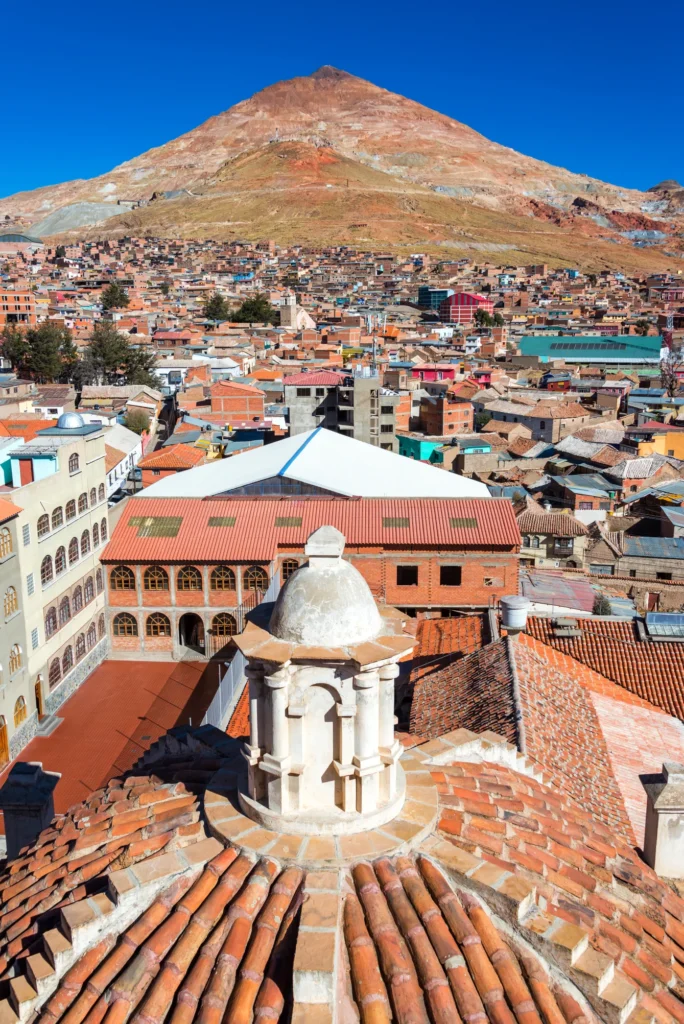
For those wishing to admire Potosí from a unique vantage point, the rooftops and viewpoints of the historic Church and Convent of San Francisco offer an unforgettable panorama: a sea of colonial rooftops, domes, and bell towers, all crowned by the majestic presence of the legendary Cerro Rico.
Visiting Potosí is far more than discovering a historic city; it is an immersion into a universe of art, memory, and emotion, where every stone, every façade, and every horizon tell the story of one of the most fascinating cities in the Americas.
ESSENTIAL EXPERIENCES IN POTOSÍ
Discovering Potosí is to immerse yourself in one of South America’s most fascinating historical and cultural destinations. Each journey reveals the legacy of a city that once shaped the course of world history and today invites travelers to experience its authenticity, depth, and timeless charm.
Historic Center of Potosí
Explore Potosí’s extraordinary historic center on foot, a UNESCO World Heritage Site. This captivating walk showcases the city’s remarkable architectural heritage, from its cobblestone streets and colonial squares to some of the finest examples of Mestizo Baroque façades in the Americas.
The visit includes entrance to the iconic Casa Nacional de Moneda, widely regarded as Bolivia’s most important historical museum. Its grand halls preserve centuries of history, art, and tradition. Along the way, you will also admire from the outside architectural gems such as the Teatro Modesto Omiste, the former Iglesia de la Compañía de Jesús, and the magnificent Iglesia de San Lorenzo de Carangas.
As an optional extension, this experience may be complemented with a visit to the historic Convento de Santa Teresa, an exceptional convent complex housing one of Bolivia’s most valuable collections of sacred art and religious heritage. Its cloisters, cells, chapels, and collections offer a fascinating insight into monastic life and the rich spiritual and artistic legacy of the colonial era.
Mining Experience at Cerro Rico
No visit to Potosí would be complete without exploring the profound mining heritage that brought the city worldwide renown. This experience begins at the traditional miners’ market, a vibrant place where, each morning, miners purchase the supplies needed for their work in the mines of the legendary Cerro Rico.
The journey then continues to one of the processing mills where extracted ore is still treated today, offering an up-close look at the techniques and processes that have sustained mining activity for centuries.
For those seeking an even more immersive experience, there is the optional opportunity to enter a colonial-era mine that remains in operation. It is a rare and powerful chance to understand, from within the mountain itself, the history, resilience, and human endeavor that have shaped the identity of Potosí through the centuries.


 English
  Spanish
  French