
 Adventure Tours
Salar de Uyuni: The largest salt desert on Earth
Covering approximately 10,582 km², the Salar de Uyuni is the largest salt flat in the world and one of the most extraordinary natural landscapes on the planet. Located in southwestern Bolivia at an average elevation of 3,656 meters (11,995 ft) above sea level, this immense white expanse is the result of the evaporation of ancient prehistoric lakes that existed more than 40,000 years ago.
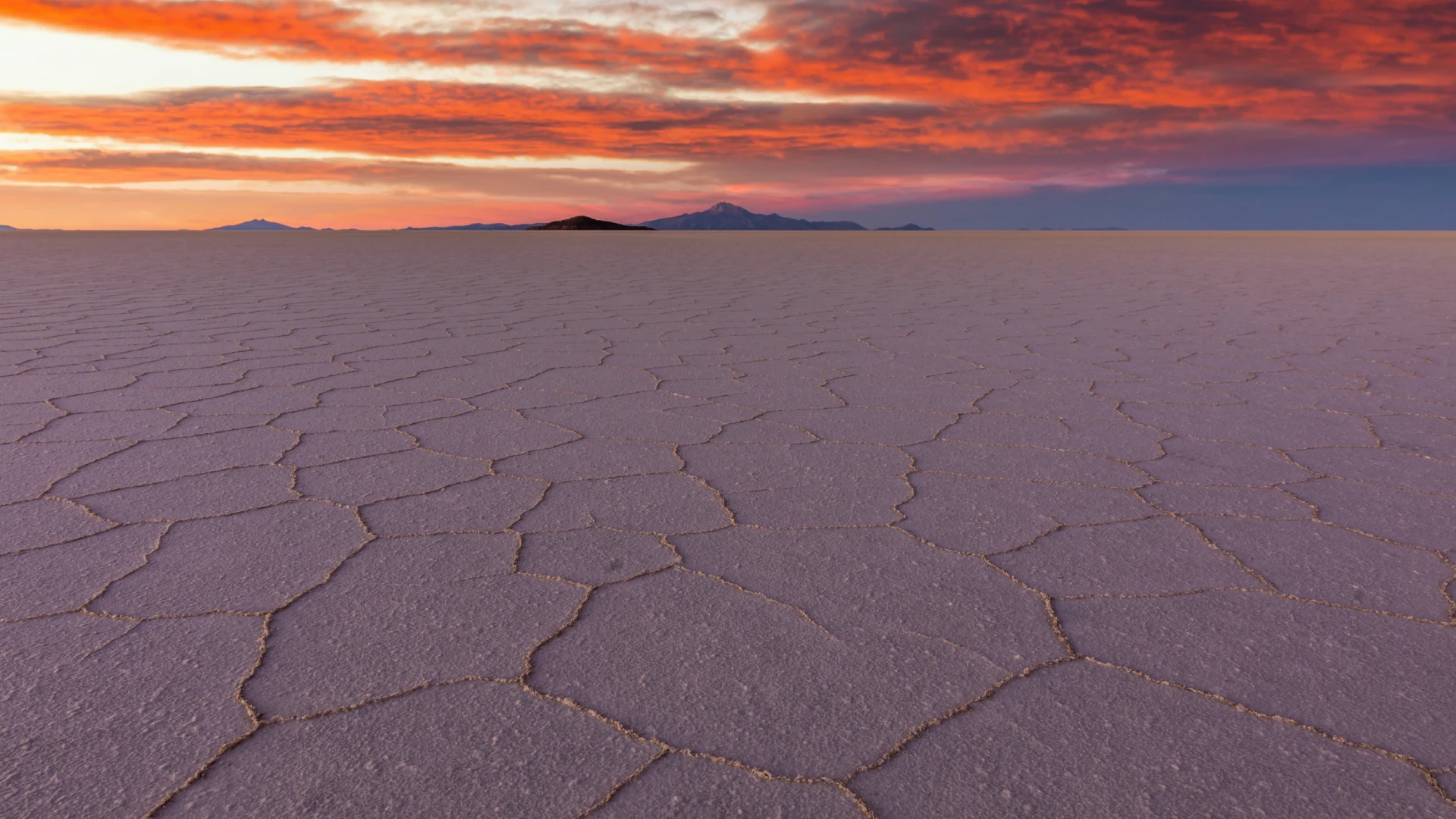
The salt flat’s surface is formed by a thick crust of salt—between 2 and 10 meters deep—arranged in natural hexagonal formations that create a unique geometric pattern. Beneath this layer lies one of the world’s largest lithium reserves, making the Salar a place of major strategic importance from both a natural and scientific perspective.
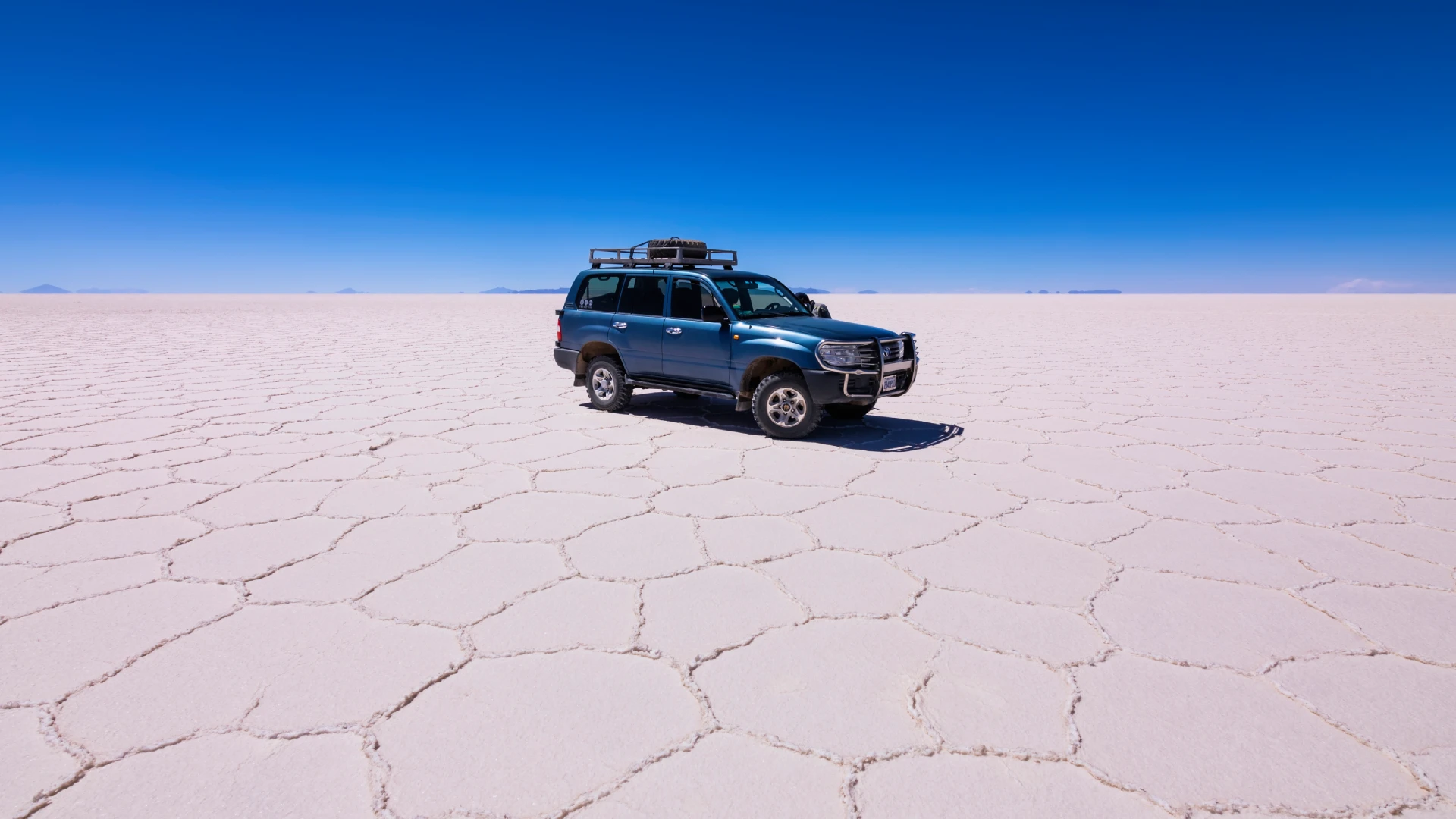
During the rainy season (January to March), a thin film of water transforms the Salar into the largest natural mirror on Earth, producing an exceptional optical phenomenon in which the sky is reflected with striking precision. In the dry season (April to November), the solid surface allows travel by 4×4 vehicles and the discovery of volcanic islands such as Incahuasi Island, covered with giant candelabra cacti that can grow over 10 meters (33 ft) tall.
Salar de Uyuni is not only a scenic wonder: its extreme flatness makes it a global reference for satellite calibration, thanks to its near-perfect level surface and high reflectivity. It also shelters fragile and surprising ecosystems, with wildlife adapted to extreme conditions.
Visiting the Salar de Uyuni means stepping into a world of absolute beauty, profound silence, and infinite scale—an experience that reshapes your sense of space and leaves an unforgettable impression on every traveler.

 English
  Spanish
  French
Comments are closed.